
Hill House: Galvanized steel creates semi-permanent museum

A radical approach for a temporary museum made of galvanized steel, housing the renovation works of an architectural masterpiece.
The Hill House by Charles Rennie Mackintosh is one of Scotland most acclaimed buildings, Grade A listed, and a seminal part of early 20th century European architecture. A hybridisation of tradition and invention in the construction of the building has led to some fundamental long-term problems of prolonged water damage. The National Trust for Scotland determined that a major conservation project was needed to avoid irreversible destruction.
Light structure
Minimal footprint
Natural weathered aesthetic
New Visitor Experience
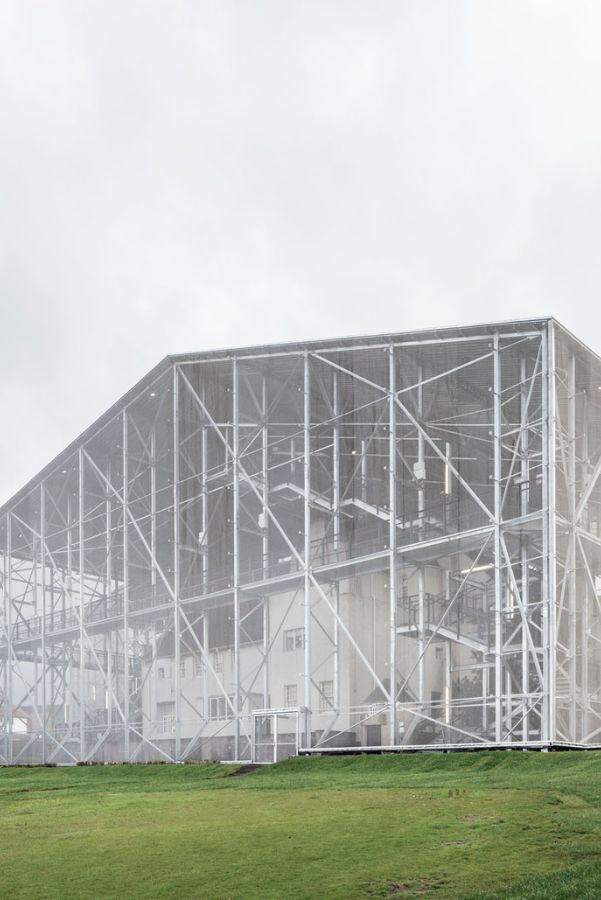
Rather than incarcerate the house away from view whilst the restoration has been undertaken, a more radical approach to active conservation has been taken. As an integral part of this conservation process, which is set to take up to ten years, a ‘big-box’ temporary museum to contain and protect the Hill House as an ‘artefact’ has been built. This allows the house to dry out and be conserved, whilst enabling visitors to see the conservation process first hand and maintain public access to the historic interiors.
Accessing Conservation in progress
Abstracted garden pavilion as semi-permanent structure
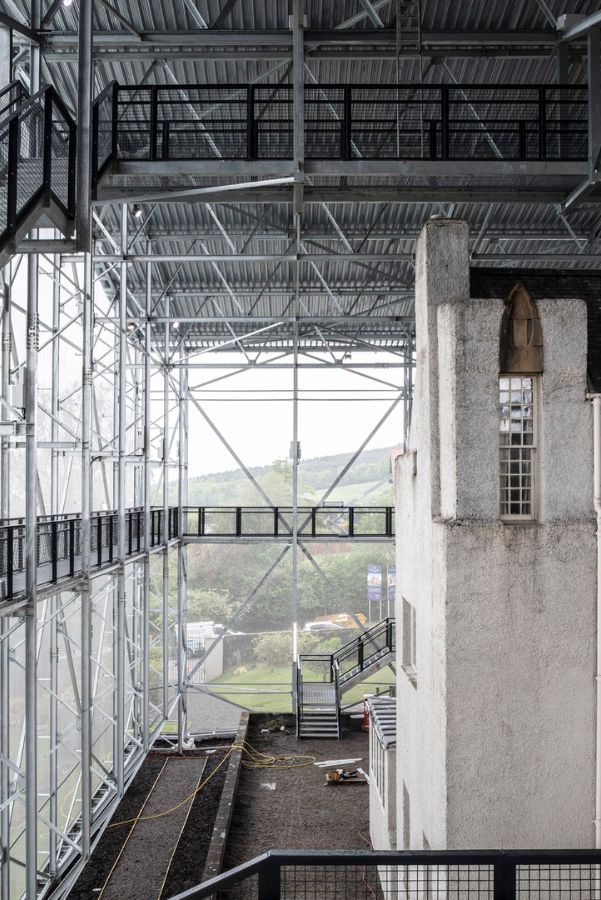
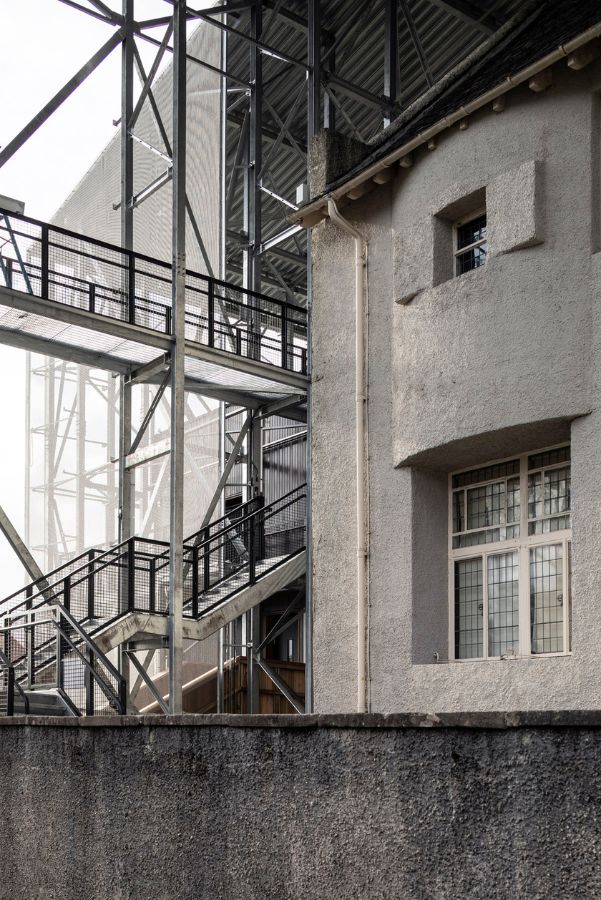
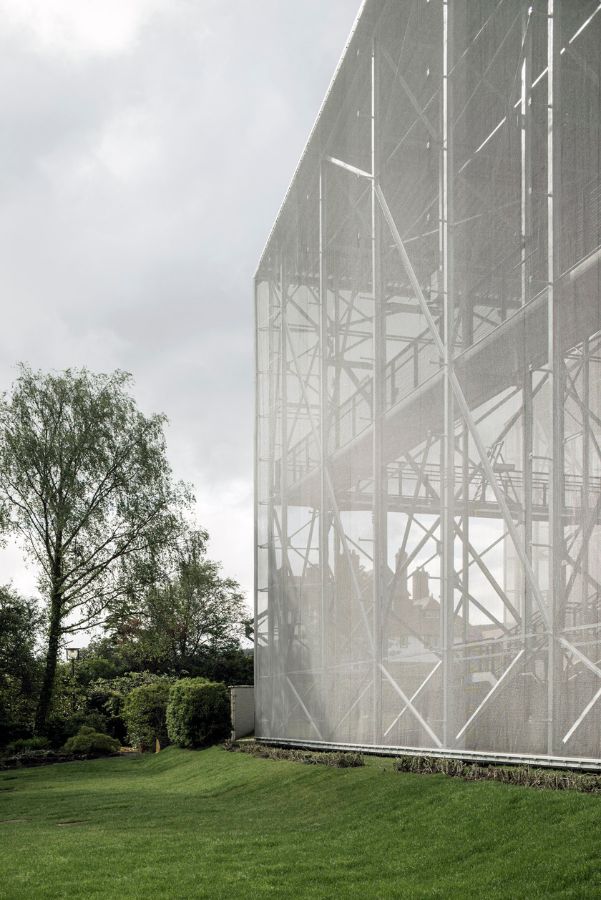
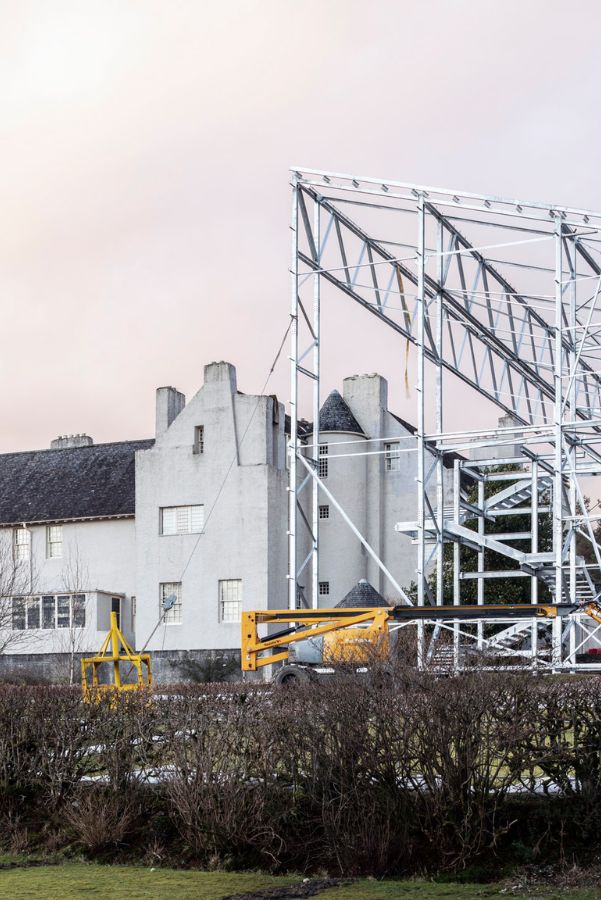
The new museum’s architectural identity is that of a huge, abstracted garden pavilion whose walls are covered entirely with a steel chainmail mesh. The galvanised cross-braced steel frame is designed to be grounded with minimum impact on the existing terraced-garden. This semi-permanent enclosure provides a ‘drying room’ shelter to the original house, whilst its rain-soaked existing construction is slowly repaired. The chainmail reduces rain penetration while allowing airflow for the building to breathe and dry naturally and sufficient light for trees to grow, bees to pollinate the garden and to naturally day-light the structure. This elegant enclosure also allows uninterrupted views, night-and-day, to and from the garden to Mackintosh’s architectural icon.
Safe shelter rethinks the idea of museum
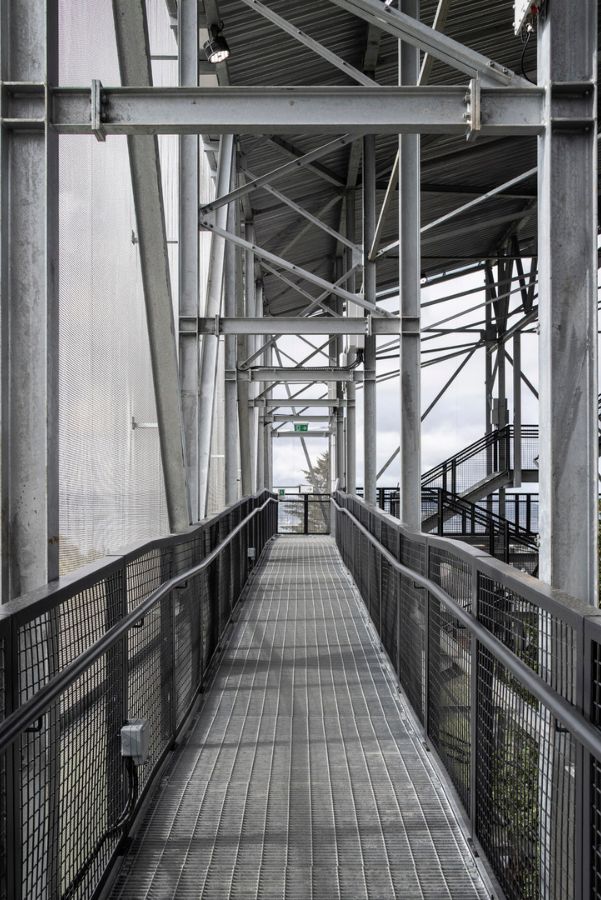
Within this safe shelter, the ‘museum’ provides a remarkable public visitor experience of conservation in progress, achieved by an elevated walkway which loops around and over the Hill House at high level. This allows visitors to see the Hill House in new ways, damage to the existing construction, and conservators repairing the building.
Constructed in twenty-five weeks, galvanised building elements were pre-fabricated to reduce the impact of site construction to the historic building.
Alongside the environmental benefits of saving the historic house we ensured that materials used can be recycled or reused once the building is removed and conservation complete. The building was designed to limit embodied and in-use energy demands for the historic Hill House and its temporary enclosure.
Increased social value that helps diversify visitor potential
This £3.2million project and aims to enhance the economic, social and cultural value within Helensburgh in part through the anticipated doubling of visitor numbers and significantly diversifying those who will visit this historic piece of Scottish architecture.
All images courtesy Carmody Groarke
©Johan Delhlin.
Sustainable Construction
Free Guide
Tailored for construction professionals, this guide showcases Europe’s top circular building projects. Learn how circular design cuts waste, costs, and carbon, while maximizing material use.